Monsante: A Modern Art Deco Font for Timeless Design
In the quest for a typeface that bridges historical grandeur with contemporary flair, designers often find themselves choosing between authenticity and modernity. Monsante offers a compelling solution, a modern Art Deco-style font that captures the geometric elegance and luxurious spirit of 1920s typography while being meticulously crafted for today's visual landscape. This distinctive font is more than a collection of letters; it's a creative asset designed to inject sophistication and a strong visual hierarchy into any project.
Understanding the Design Language of Monsante
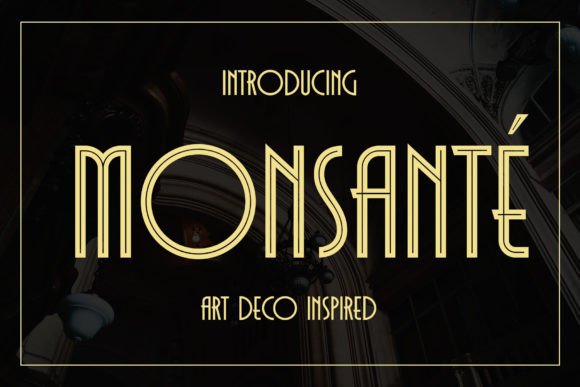
Drawing direct inspiration from the Art Deco movement, Monsante is characterized by its crisp letterforms, balanced proportions, and distinctive geometric elements. This isn't mere imitation; it's a thoughtful reinterpretation that aligns with modern aesthetics. The font’s architecture provides a sense of structure and luxury, making it a powerful tool for brand identity and visual communication. Available in two versatile styles—Regular and Inline—it offers designers flexibility to create depth and emphasis within a single typographic family. The Inline variant, in particular, adds a layer of intricate detail perfect for standout headlines and display text.
Practical Applications Across Creative Projects
The true value of a font like Monsante lies in its application. Its inherent elegance makes it exceptionally suited for projects where first impressions are paramount. Consider its role in strengthening a brand's core identity. A logo design set in Monsante immediately conveys a sense of established quality, heritage, and premium positioning, ideal for luxury goods, boutique agencies, or high-end services.
Beyond logos, its utility spans a wide array of creative and professional contexts:
- Branding & Marketing: Use it for business cards, letterheads, and presentation templates to create a cohesive and professional image. In advertising campaigns, its striking forms capture attention in print and digital media.
- Editorial & Packaging Design: For book covers, magazine headlines, or luxury packaging, Monsante provides the visual impact needed to stand out on shelves and screens. Its clear letterforms ensure readability at various sizes.
- Digital & Social Media: Elevate social media graphics, website hero sections, and UI elements like headers or call-to-action buttons. Its modern compatibility ensures it performs beautifully in web design and UI/UX contexts.
- Special Occasions & Merchandise: From wedding invitations and award certificates to menu designs and branded merchandise, this font adds a touch of ceremony and custom craftsmanship.
Integrating Monsante into Your Design Workflow
Adopting a new typeface requires strategic thinking. To effectively integrate Monsante, consider its pairing. It often pairs beautifully with clean, neutral sans-serif fonts for body text, creating a dynamic contrast that guides the reader's eye and establishes a clear visual hierarchy. This combination ensures that while the display type is expressive, the overall design remains balanced and highly legible.
Furthermore, the font's PUA encoding is a significant workflow advantage. It provides easy access to all glyphs, ligatures, and special characters without requiring specialized design software knowledge. This allows for creative flourishes and custom typographic details that can make a design feel truly unique, from stylistic alternates to elegant swashes.
When selecting any creative asset, evaluate it against your project's goals and audience. Monsante excels where the objective is to communicate luxury, tradition, artistry, or confident modernism. Its scalability across print and digital platforms makes it a reliable component in a designer's toolkit, ensuring consistency from a small mobile screen to a large-format print piece.
Ultimately, thoughtful typography is a cornerstone of effective design. Choosing a font like Monsante is an investment in the clarity and emotional resonance of your message. Quality creative assets do more than decorate; they communicate, establish trust, and elevate the perceived value of the content they present, making every design decision a step toward more powerful visual storytelling.