Stencil: Merging Industrial Grit with Digital Precision
In a design landscape saturated with smooth gradients and minimalist vectors, the raw, tactile energy of industrial typography is making a powerful comeback. Stencil emerges as a definitive creative asset, bridging the gap between tactical industrial layout art and intricate abstract geometry. This cutting-edge digital patterned font pack reinterprets the classic military spray-shield aesthetic, offering an ultra-bold display typeface that commands immediate attention.
Anatomy of a Modern Typeface
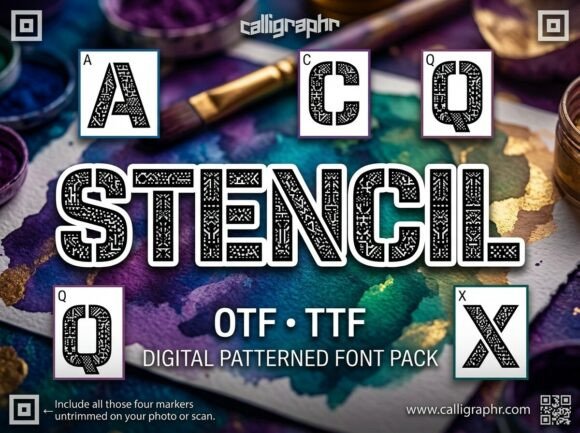
What immediately sets Stencil apart is its structural integrity. The font features heavy block characters sliced with clean, structural bridge gaps—a hallmark of functional stencil design. However, the innovation lies beneath the surface. Each letter envelope is completely filled with a complex, high-density matrix of maze-like circuit lines and micro-geometric textures. This internal architecture transforms standard characters into intricate visual statements, perfect for projects requiring an intellectual, high-tech punch.
Despite its complexity, readability remains paramount. The typeface includes crisp, high-contrast outer contours that ensure absolute legibility. This allows designers to place the text confidently over complex fine-art backdrops, wet-paint watercolor textures, or digital canvas fields without losing the message. It is a phenomenal choice for visual hierarchy, where the headline needs to be both informative and visually arresting.
Practical Applications for Visual Impact
The versatility of a typeface like Stencil extends across various sectors of graphic design and branding. Its unique aesthetic is particularly effective for projects that require a blend of rebellion and precision. Consider these practical applications to elevate your creative projects:
- Brand Identity & Logo Design: Use Stencil to create memorable logos for tech startups, security firms, or streetwear brands. The geometric textures convey innovation and complexity, while the stencil gaps suggest functionality and transparency.
- Digital Marketing & Social Media: In the fast-paced scroll of social media graphics, bold typography stops the eye. This font is ideal for alternative music album art covers, cyberpunk gaming user interfaces, and high-impact advertising campaigns.
- Product Design & Packaging: For merchandise, tech-inspired sticker decals, and packaging design, the industrial aesthetic adds a layer of perceived value and durability. It suggests that the product inside is engineered and robust.
- Editorial & Web Design: When used for progressive layout headings in editorial design or UI design, Stencil anchors the page with a distinct personality, guiding the user’s eye and establishing a modern aesthetic.
Integrating Stencil into Your Design Workflow
When incorporating a display font with such a strong personality, thoughtful application is key to maintaining a polished, professional presentation. Typography is a voice; Stencil speaks loudly, so it must be used with intention.
First, consider your color palette. High-contrast colors—such as neon greens against dark backgrounds or stark whites against industrial grays—can highlight the intricate internal geometry of the font. Second, manage your visual hierarchy carefully. Because Stencil is ultra-bold and detailed, it works best as a headline or accent font. Pairing it with a clean, sans-serif typeface for body text ensures that your design remains readable and does not overwhelm the audience.
Finally, evaluate the context of your design goals. For a futuristic street apparel graphic, the font can be used at large scales to showcase the maze-like textures. Conversely, for a sleek tech-inspired sticker, the crisp outer contours should be the focus. Always test the font against your specific backdrops to ensure the structural bridge gaps remain visible and effective.
Elevating Communication Through Typography
In the realm of professional graphic design, typography is more than just letters on a screen; it is a fundamental pillar of communication and user experience. Selecting a typeface like Stencil allows designers to inject personality, emotion, and context into their work instantly. It bridges the gap between raw industrial roots and the polished demands of modern digital marketing.
By leveraging high-quality creative assets that balance aesthetic appeal with functional legibility, creators can build stronger brand identities and more engaging user interfaces. Whether you are developing a cyberpunk game interface, designing a bold album cover, or crafting a forward-thinking brand identity, the right typography ensures your message is not just seen, but felt. Thoughtful design choices, supported by assets like Stencil, ultimately lead to more effective communication and a memorable visual presence.